ERCES in 2026: what building owners need to know before the fire marshal asks
Emergency responder radio coverage is now a code requirement in most jurisdictions — and a certificate-of-occupancy blocker. A plain-English guide to ERCES, BDA/DAS, and the process.
Somewhere near the end of your construction project, the fire marshal walks the building with a radio. If firefighters' and police radios do not work in your stairwells, basement, and pump rooms, you do not get your certificate of occupancy — and the fix you improvise at that stage is the most expensive version of it.
The system that prevents this is an ERCES — an Emergency Responder Communication Enhancement System. If you own, develop, or manage buildings, here is the whole topic in plain English.
Why radios fail indoors (and why it got worse)
Modern buildings are excellent radio shields. Low-emissivity glass, concrete and steel cores, below-grade levels, and energy-efficient envelopes all attenuate the public-safety frequencies first responders use. The greener and tighter the building, the worse the coverage — which is why brand-new construction fails these tests more often than 1980s stock.
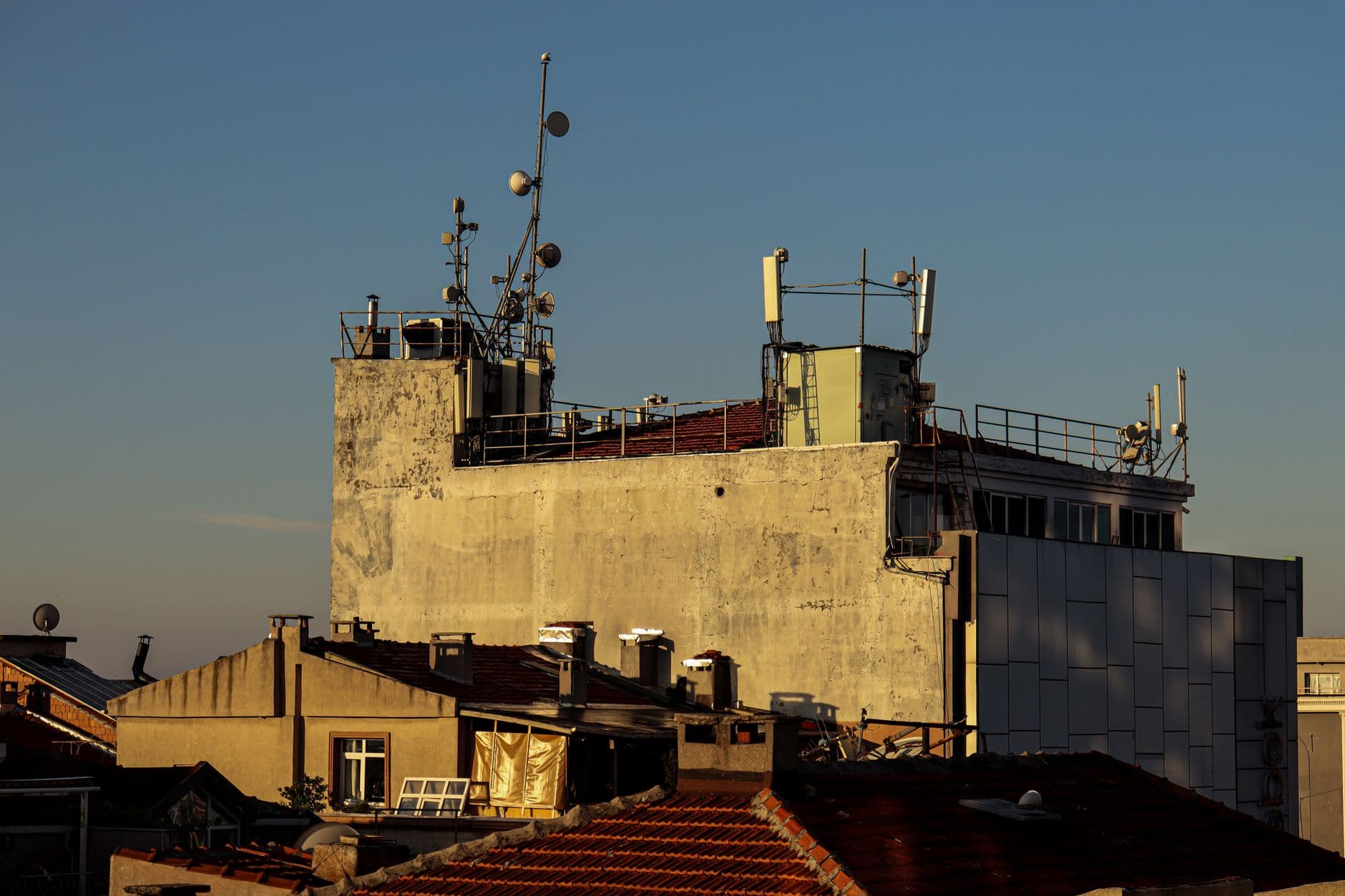
An ERCES fixes this with a donor antenna on the roof, a signal booster (a BDA — bi-directional amplifier), and a distributed antenna system (DAS) that carries the signal through the building on cable to antennas placed where coverage is weak.
Public-safety radio site
▲
│  (donor antenna, roof)
[BDA]  ── battery backup, supervised alarms
│
├────┼────┬─────────┐
antenna  antenna  antenna   ← stairwells, basement,
(coax/fiber through risers)   fire pump room, garage
What the codes actually require
The requirements come from the International Fire Code (Section 510) and NFPA standards (NFPA 1225, which consolidated the older communications standards, plus NFPA 72 for related alarm provisions), as adopted and amended by your local jurisdiction. Adoption details vary — the authority having jurisdiction (AHJ) always has the final word — but the pattern across most adopted codes looks like this:
| Requirement | Typical threshold |
|---|---|
| General building coverage | ~95% of each floor |
| Critical areas (stairs, fire command, pump rooms) | ~99% coverage |
| Minimum signal strength | Around -95 dBm inbound and outbound |
| Audio quality | Measured DAQ score (typically 3.0+) |
| Power resilience | Battery backup (commonly 12–24 hours) |
| Monitoring | Supervised by the fire alarm system |
| Equipment | Listed for the purpose (e.g., UL 2524 for BDAs) |
| Ongoing compliance | Acceptance test + periodic (typically annual) recertification |
Two things surprise owners. First, this applies to existing buildings in many jurisdictions when coverage is found deficient — not just new construction. Second, passing once is not the end: recertification is recurring, and frequencies or neighboring construction can change your RF environment.
The process, start to finish
- RF benchmark survey. A grid-based measurement of existing public-safety signal throughout the building. Sometimes the survey shows you pass — that documentation alone is valuable.
- Design. If coverage falls short, an ERCES is engineered — donor location, BDA sizing, antenna placement, cable routing — modeled in RF design software (we design in iBwave, the industry standard) and packaged for AHJ review.
- Permitting. The design goes to the AHJ and, critically, the FCC licensee of the public-safety frequencies must approve retransmission. Skipping this step is a federal problem, not a paperwork problem.
- Installation and integration with fire alarm supervision and backup power.
- Acceptance testing with the AHJ — the grid walk, signal and DAQ measurements, alarm verification.
- Annual recertification and remediation as the building or RF environment changes.
What it costs (drivers, not quotes)
Honest answer: it ranges too widely for a blog number. The drivers are building size and construction type, how many floors fail benchmark, donor signal quality at the roof, cable pathway availability, and your AHJ's specific amendments. A benchmark survey is the cheap step that turns "somewhere between X and 10X" into a real budget — and occasionally into "you pass, here is the report."
Questions to ask any ERCES vendor
- Are your designers iBwave certified, and will we receive the design files?
- Do you handle AHJ coordination and FCC licensee approval, or is that on us?
- Is the BDA UL-listed for public safety and supervised per code?
- What does the annual recertification cost and include?
- Will the acceptance test be run to our jurisdiction's amended thresholds, not just the model code?
A vendor who answers those five crisply will get you to a CO. One who waves at "code compliant" without naming your AHJ's amendments is learning on your building.